When I first began working at a United Nations agency tasked with preserving culture, I was intrigued to learn that there wasn’t just a World Heritage List,where nations nominate their monuments for global recognition and national pride, but another quieter, lesser-known list: Listof Intangible Cultural Heritage.
I admit, the word intangible unsettled me. Sixteen traditions listed under my country’s name—each one I could hear, taste, smell, touch. If this heritage was intangible, I wondered, then what was I remembering so vividly?
I’ve felt henna slowly dry and tighten on my skin. I’ve scraped it off carefully. I’ve revealed its bright orange swirls that darkened with time.
What part of that is intangible?
I’ve watched my mother stir harees for hours. I’ve let the first bite melt on my tongue. I’ve savored its warmth as it spread through me.
What part of that is intangible?
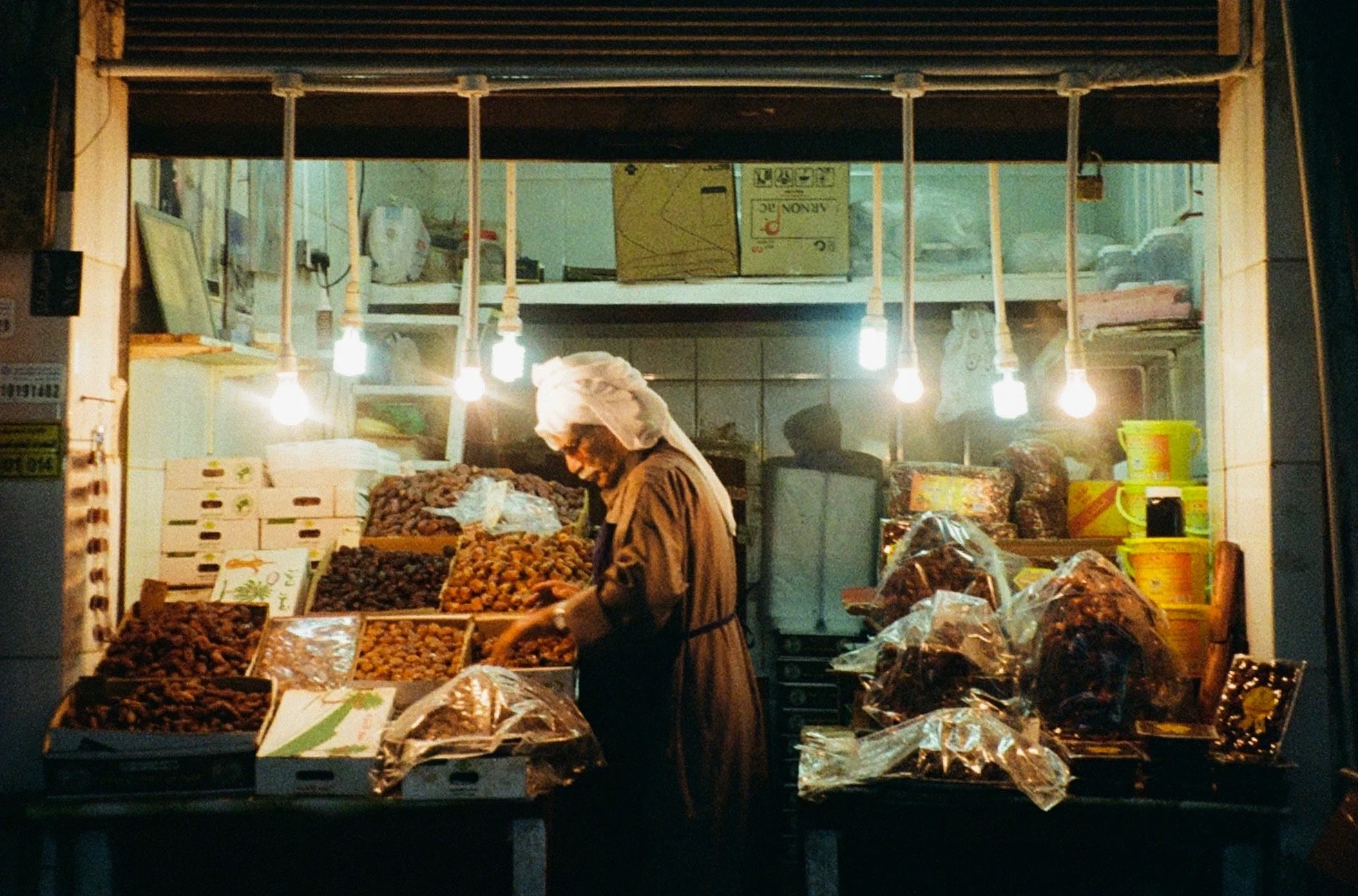
I’ve tasted the sweetness of dates passed around a majlis, heard the clink of Arabic coffee cups, breathed in the perfume of Taif rose petals with each sip of tea, felt the softness of woven sadu beneath me.
How could any of this be intangible?
But, over time, I began to understand. These gestures, these tastes, these sounds, however sensorial, are vulnerable.
They live in memory, in repetition, in transmission. And just as easily, they can disappear.
I began to see how these practices—beyond aesthetics, beyond nourishment—are threads of identity, maps of belonging, anchors of continuity.
They reside in the hands of those who craft them, the hearts that remember them, and the grandchildren who learn and document them.
A recipe, a song, a story. They are declarations. Proof of presence. A lineage that cannot be bulldozed.
And I understood then what Mahmoud Darwish meant by:
خوف الغزاة من الذكريات The invaders fear of memory.
Because memory, too, resists.
I understood how the bombing of a home is meant to bury an entire oral archive. How the uprooting of a neighborhood is meant to dissolve decades of shared rituals.
How the death of a painter, a poet, a novelist is not collateral—it is erasure.
Cultural heritage is intangible because of how fleeting it is. Because a dance cannot be performed at a mass funeral. Because there is no bread to bake in a famine. Because stories require children to tell them to.
It is intangible because it must be remembered in order to exist. And must exist in order to be remembered.
Manar is a multidisciplinary artist and political researcher whose work moves between policy rooms and personal archives. She navigates the intersections of culture, diplomacy, and narrative. Follow her on Instagram.